Why is it so hard to bring brutal despots to justice?
(WP 12/16/2022)
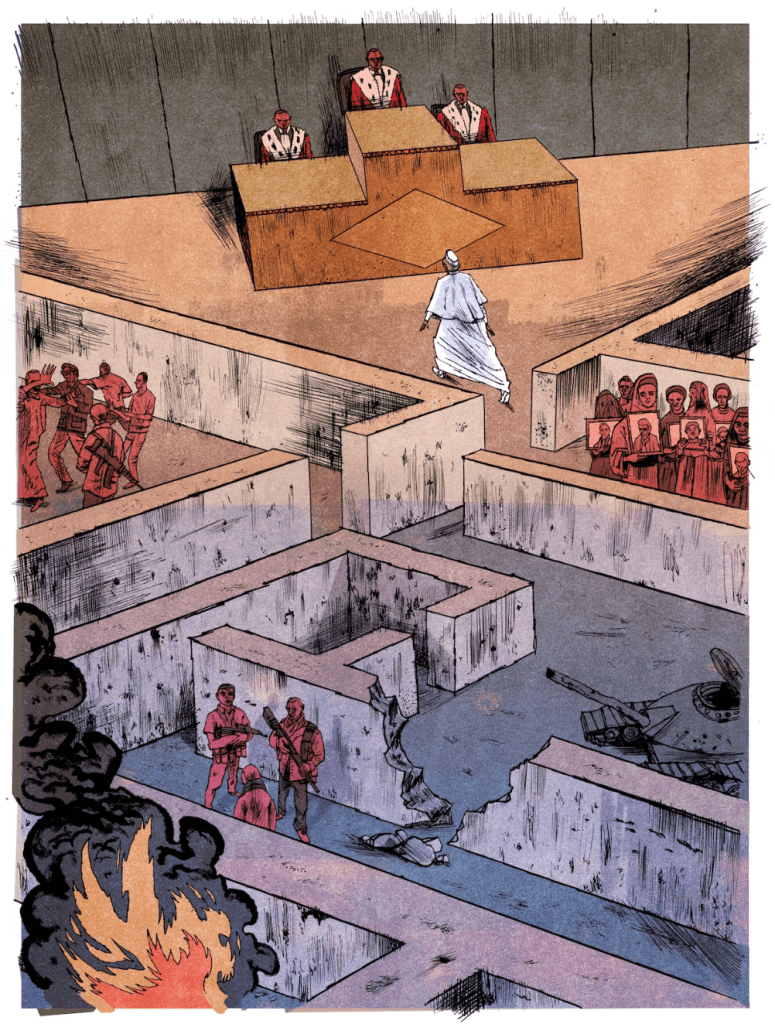
In ‘To Catch a Dictator,’ Reed Brody tells the long, tangled tale of reeling in Chad’s Hissene Habre.
When Hissene Habre, the former dictator of Chad, was arrested early one Sunday morning in June 2013 at his luxurious compound-in-exile in Dakar, Senegal, celebrations erupted across the country he had terrorized some 2,000 miles away. As president of Chad from 1982 to 1990, Habre slaughtered, starved and raped his people and pilfered millions of dollars. In 1992, a national truth commission estimated that he and his political police were responsible for systematic torture and the deaths of 40,000 Chadians.
Now in custody, the despot would finally have to answer for his crimes.
What does Obama really think about Biden? His memoir doesn’t say.
(WP 11/18/2020)
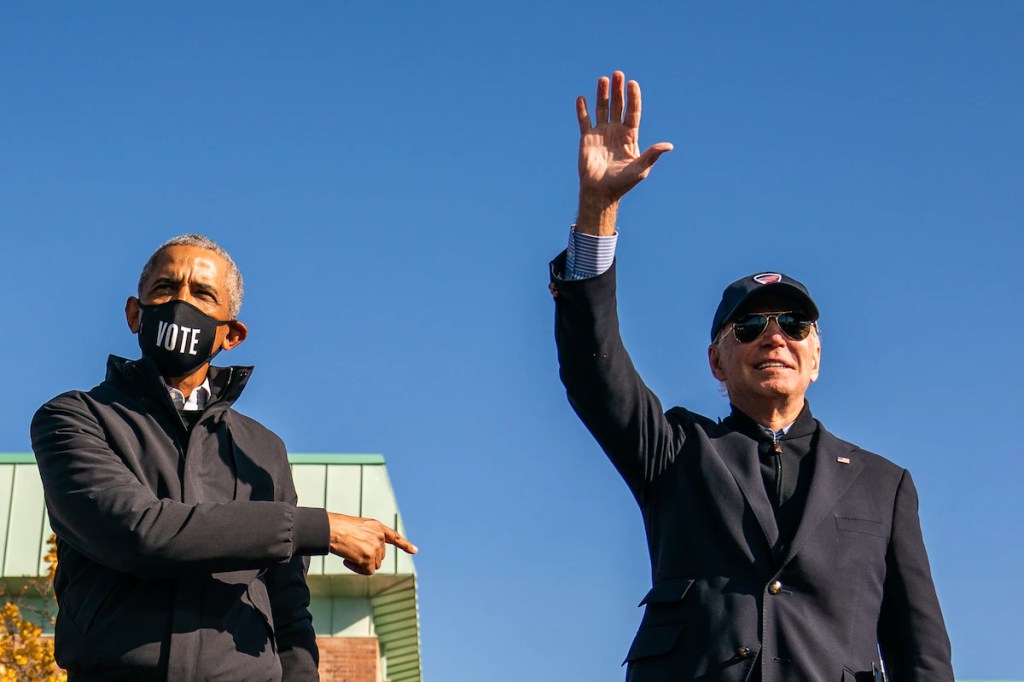
Former president Barack Obama sprinkles his new memoir with some kind words for his onetime wingman Joe Biden. “Joe had heart,” he writes in “A Promised Land.” “He had endured unimaginable tragedy. . . . Joe was decent, honest, and loyal. I believed he cared about ordinary people.” But haven’t we heard all this before? In one form or another, Obama has uttered these plaudits again and again.
Looking for a lover? Put down that comb, because it doesn’t matter how hot you are. “Actually,” Hannah Fry explains in “The Mathematics of Love,” “having some people think you are ugly can work in your favor.” For online dating, you can even stop fretting over your profile photo. Doing what most people do — hiding what makes you look unattractive — is exactly what you shouldn’t do. “When choosing a profile picture, you should play up to whatever makes you different — including the things that some people might not like,” Fry counsels. “So be proud of that bald patch, show off that ill-advised tattoo, and get that belly out.”
Fossils unlock the evolution of life on Earth, revealing our path from mere microscopic filaments to upright humans. Here’s a quick journey through the ages as told in 10 fossils, adapted from “A History of Life in 100 Fossils” by Paul D. Taylor and Aaron O’Dea (Smithsonian Books, $34.95).
1. Apex Chert
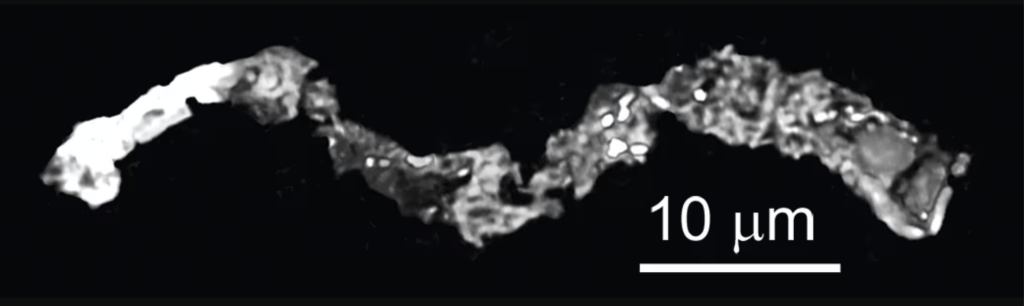
These – the world’s oldest fossils – are estimated to be about 3.465 billion years old. But are they truly fossils? Found in Western Australia in a glassy rock called the Apex Chert, they are made up of microscopic filaments that some scientists believe are nothing more than non-biological, inorganic structures. But others argue the fossils are bits of bacteria, which is consistent with chemical evidence, suggesting that life on Earth did in fact exist 3.5 billion years ago.
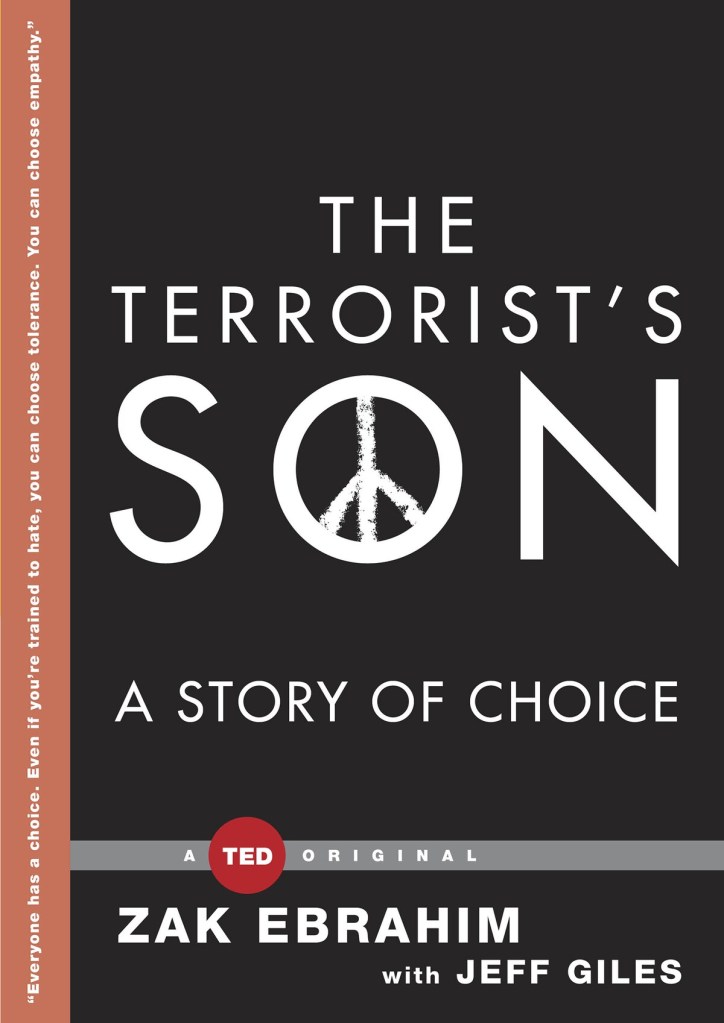
‘The Terrorist’s Son: A Story of Choice,’ by Zak Ebrahim with Jeff Giles
(WP 9/11/2014)
Zak Ebrahim has grappled with two opposing dreams throughout his life. One dream — the fancy of a young boy — was that his absent father, loving, gentle Baba, who pushed him on the swings, would one day come back to him. The other — the hard wish of a maturing young man — was that he could purge himself of all traces of his father and his “murderous hatred.”
In 1990, when Ebrahim was 7 years old, his father, Egyptian-born El-Sayyid Nosair, shot and killed Meir Kahane, the extremist rabbi who founded the Jewish Defense League, and then three years later while in prison helped mastermind the bombing of the World Trade Center. Ebrahim has spent his life reckoning with his terrorist father and “struggling with the devastating feeling that I was somehow complicit by blood,” he writes in his compact, important book, “The Terrorist’s Son.” By telling his story, he hopes “to offer a portrait of a young man who was raised in the fires of fanaticism and embraced nonviolence instead.”
‘Words From the White House: Words and Phrases Coined or Popularized by America’s Presidents’ by Paul Dickson
(WP 2/8/2013)
President Obama is now hard at work carving out his legacy — his heart set on being remembered for decisive action on health care, gun control, immigration and equal rights. But there’s one arena where No. 44 has to pick up his game. So far, according to lexicographer Paul Dickson, Obama’s impact on our language has largely amounted to passing on to the American people the phrase “wee-weed up.” Speaking at a national health-care forum in the summer of 2009, Obama dropped the rather coarse neologism to describe the riled-up mood in Washington: “There’s something about August going into September where everybody in Washington gets all wee-weed up. I don’t know what it is. But that’s what happens.”
Glenn Beck’s paranoid thriller, “The Overton Window”
(WP 6/15/2010)
The success of Glenn Beck’s novel, “The Overton Window,” will be measured not by its literary value (none), or its contribution to the thriller genre (small), or the money it rakes in (considerable), but rather by the rebelliousness it incites among anti-government extremists. If the book is found tucked into the ammo boxes of self-proclaimed patriots and recited at “tea party” assemblies, then Beck will have achieved his goal.
A selection of Steven Levingston’s pieces on drama.
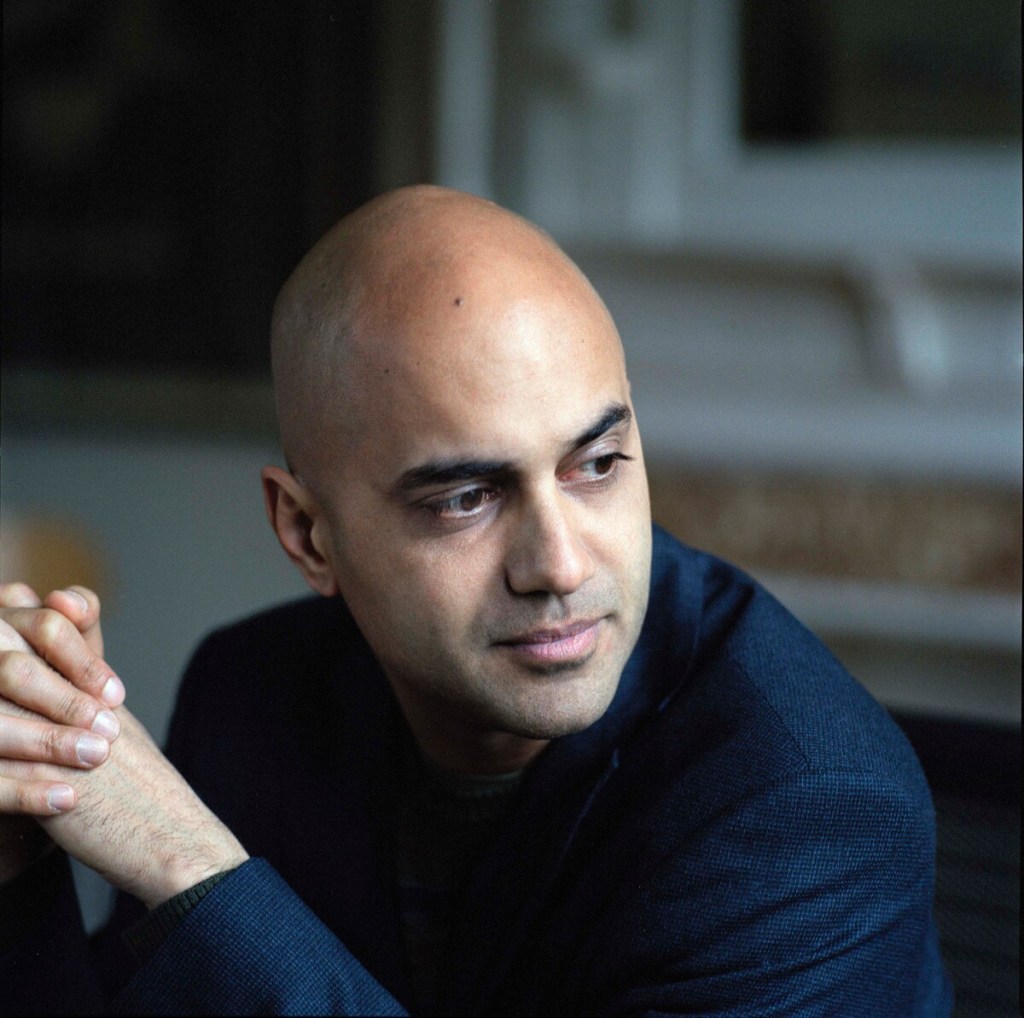
Ayad Akhtar: On Muslim identity, and life in America
(WP 7/19/2014)
To appreciate the relevance of playwright Ayad Akhtar’s work, you need look no further than two eerie coincidences that shadowed his debut drama, “Disgraced.” The play, which portrays the downfall of a Muslim American lawyer, won the Pulitzer Prize for drama in 2013. The day the award was announced, two Muslims deposited pressure-cooker bombs near the finish line of the Boston marathon. A second grisly coincidence came a few weeks later. On the day “Disgraced” opened in London two Muslims murdered and tried to behead a British soldier on a busy street in what one said was revenge for the British army’s killing of Muslims in Iraq and Afghanistan. Nobody linked these attacks to Akhtar’s play, but they were nonetheless chilling reminders of the violence that hovers at the edges of the territory he explores. “The work I’m doing is in direct dialogue with what’s happening in the Muslim world,” he said recently over dinner in New York.
Q&A with Ayad Akhtar, the Pulitzer Prize winner in drama
(WP 4/19/2013)
Ayad Akhtar, who received the Pulitzer Prize in drama last week, is a man of many talents and daring insights. As an actor, screenwriter, novelist and playwright, he challenges Americans to question their assumptions about race and religion.
Born in New York City to Pakistani immigrants and raised in Milwaukee, Akhtar played an enigmatic Pakistani engineering student who turns from secularism to terrorism in the film “The War Within,” which he also co-wrote.
My drama: Getting a new play staged is all comedy and tragedy
(WP Magazine 4/5/2013)
About three years ago I did something that only a puffed-up fool would do: I wrote a play. For three weeks I was maniacal about it, and when I dropped the final curtain I nodded my head knowingly — this baby was a winner: All I had to do was get the script into the right hands, and before I could belt out, “There’s no business like show business,” audiences would be filling the seats, laughing and applauding riotously in the dark.
Thus began my tale of what Eugene O’Neill might call a lunatic’s pipe dream, a story of innocence, hope and crushing neglect. But it’s not my story alone. You need only read a day’s worth of the yearnings on LinkedIn’s playwriting group, scan the entry rules for hundreds of play competitions, or study the stiff-armed guidelines for submissions to regional theaters to realize that other pipe-dreaming playwrights-to-be are having their own egos stomped. Yet, we keep coming back for more, knowing full well that the odds of getting a play produced are about the same as getting killed by a falling coconut (that’s one in 250 million) — or at least it feels that way.
‘My Fair Lady’ replacement shines at Arena Stage in an unforgettable evening
(WP 1/6/2013)
It was looking awfully bleak for the Saturday evening performance of “My Fair Lady” when Artistic Director Molly Smith walked onstage surrounded by her cast to deliver some grim news.
She informed the nearly full house that flu had laid low several cast members, including Manna Nichols, who played the lead role of Eliza Doolittle.
To have an understudy step in is usually a disappointment for an audience that arrives expecting to see the stars. In this case, even Nichols’s replacement, Erin Driscoll, was absent: She had lost her voice.
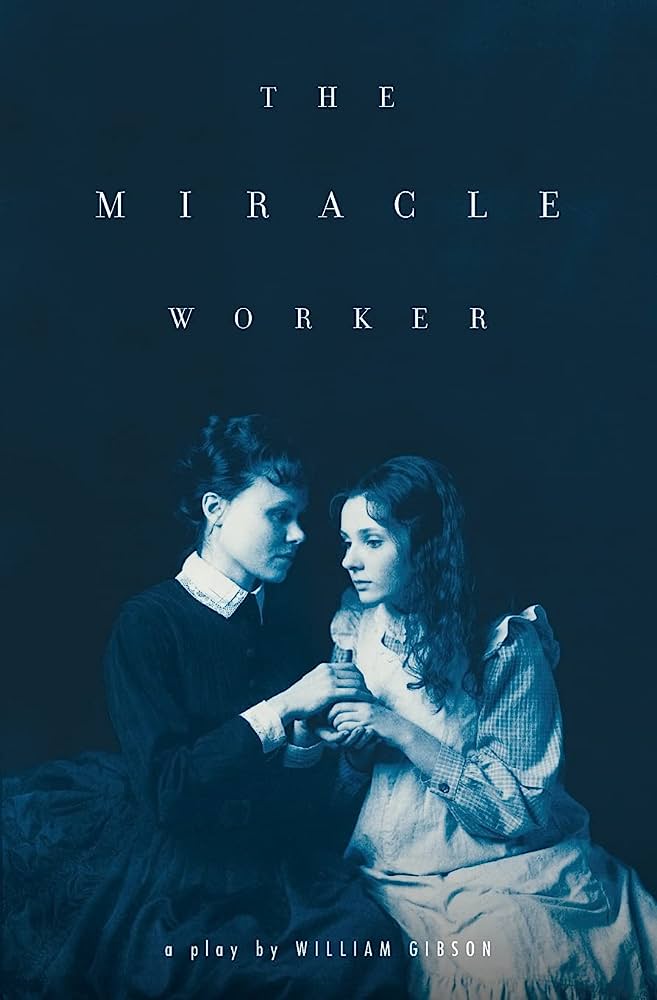
Rummaging in the basement a few weeks ago, I came upon a copy of William Gibson’s play “The Miracle Worker” in a 40-cent, Bantam paperback edition from 1962, its pages the color of a Daguerreotype. I started reading and couldn’t stop. This 1960 Tony Award-winner is the story of Annie Sullivan, who overcomes daunting odds to teach the deaf, blind, mute Helen Keller to communicate. As a play-reading experience, it is near-perfect. The dialogue gives vivid shape to stubborn Annie and each member of Helen’s tortured family. You won’t find any thriller more gripping, more packed with a daisy chain of dramatic crises.
But read a play? What a nutty idea! Plays aren’t meant to be read, they’re to be seen and heard. Pulitzer Prize-winning playwright Donald Margulies understands this: He writes not for the page but for the stage. His plays, he told me, are blueprints for actors and directors, incomplete until they’re performed. Tennessee Williams knew this, too. He tested out his new plays by reading them aloud to friends. Thornton Wilder perhaps put it best. He said that while fiction, painting and sculpture can be appreciated in solitude, “a play presupposes a crowd.”




 Steven Levingston